
Doomsday preppers beware; the end of the world is amongst us.
That is, if a sustainable and electric world is your worst nightmare.
Because, EV utes are about to make a huge wave in Australia.
The signs are already clear. The BYD Shark 6, a PHEV hybrid, was released early this year and has already sold more than 15,000 units, demonstrating a powerful consumer appetite for electrified utility vehicles.
So, if demand is shifting rapidly towards an EV future, is the supply market ready to follow? The answer is an emphatic “yes,” with three heavyweights—or future heavyweights—stepping into the ring to challenge the established diesel dominance.
The new battleground pits range against towing capacity, and premium comfort against raw, uncompromising capability.
The Contenders: Range, Capability, and Compromise
The first crop of mainstream electric utes arriving in Australia are defining their niche, each with a distinct set of priorities.
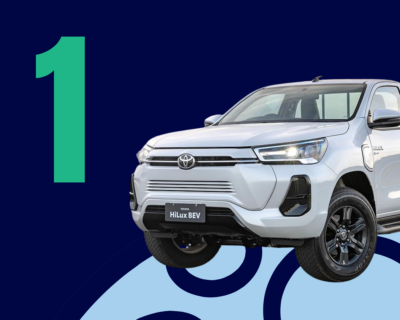
1. The Reliable Rookie: Toyota HiLux EV
Toyota’s electrified version of the nation’s best-selling car enters the market with a focus on usability for the daily grind rather than extreme heavy-duty work.
Key Specs: Power comes from a 59.2kWh battery, providing a modest ~240km WLTP range. The dual electric motors deliver permanent All-Wheel Drive, giving it decent initial acceleration.
The Trade-Off: The HiLux EV is clearly geared toward shorter hauls. Its capability is capped at a 715kg payload and 1600kg braked towing, significantly less than its diesel sibling.
The Upside: It supports up to 125kW DC fast charging and includes Vehicle-to-Load (V2L) capability, allowing users to power tools and campsites—a huge win for tradies and weekenders. It also packs modern Toyota safety technology and large screens.
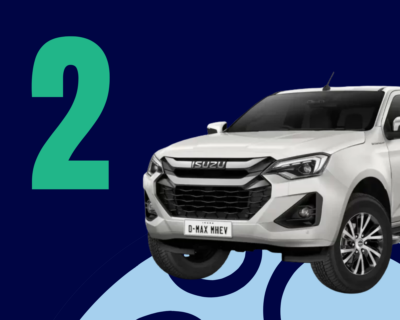
2. The Uncompromising Workhorse: Isuzu D-Max EV
The Isuzu D-Max EV takes a different approach, signaling that an EV transition doesn’t necessarily mean sacrificing capability.
Key Specs: It features a larger 66.9kWh lithium-ion battery for an estimated 263km (WLTP) range. The dual electric motors produce a combined 140kW/325Nm, channeled through a full-time 4WD system.
The Capability King: The D-Max EV’s main selling point is its unwavering commitment to utility: it retains the full 3.5-tonne braked towing capacity and the 1-tonne payload expected by the market, achieved via an adapted ladder-frame chassis with a De Dion rear axle.
The Catch: To maintain this capability, charging speeds are conservative, with DC fast charging limited to 50kW, meaning a 20-80% charge takes around 60 minutes.
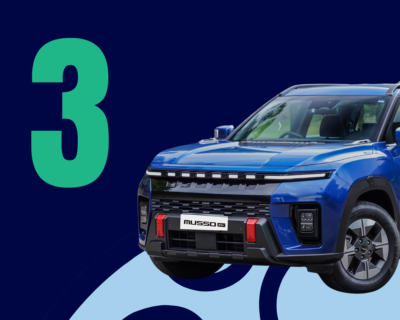
3. The Premium Cruiser: KGM Musso EV
The 2026 KGM Musso EV (from the brand formerly known as SsangYong) approaches the segment with a focus on luxury and range, potentially appealing to families and urban buyers.
Key Specs: In its dual-motor, all-wheel-drive configuration, the Musso EV is powerful (304kW/339Nm) and promises a strong 380-plus kilometre WLTP range. It supports fast-charging up to 120kW, capable of replenishing 80% of the battery in just over 30 minutes.
The Luxury Touch: First impressions suggest the Musso EV is one of the most comfortable options. It features a premium cabin with heated/ventilated Nappa leather seats, a heated steering wheel, V2L functionality, and twin-screen infotainment displays.
The Compromise: The smooth, composed ride is thanks to a multi-link rear suspension, but this design decision drastically limits its work capability. Its payload sits at around 690kg, and braked towing is 1,800kg, putting it well behind the class standard for heavy-duty work.
The Electric Dawn
The emerging electric ute market is not a monolith; it’s a spectrum of options.
The Isuzu D-Max EV targets the traditional worker who needs maximum towing, despite sacrificing charging speed and potentially ultimate range. The Toyota HiLux EV is the versatile tradie vehicle, prioritizing quick charging and V2L convenience. Meanwhile, the KGM Musso EV is the lifestyle vehicle, appealing to buyers who value a long range and a premium cabin experience over moving a tonne of bricks.
For doomsday preppers who fear an EV future will affect their ability to buy cool and big cars, this new wave of EV’s proves that electrification isn’t going to take that away, it just means they’ll be working a whole lot quieter. The competition is already fierce, and the only question now is which trade-off buyers are ready to accept in the new electric era.