
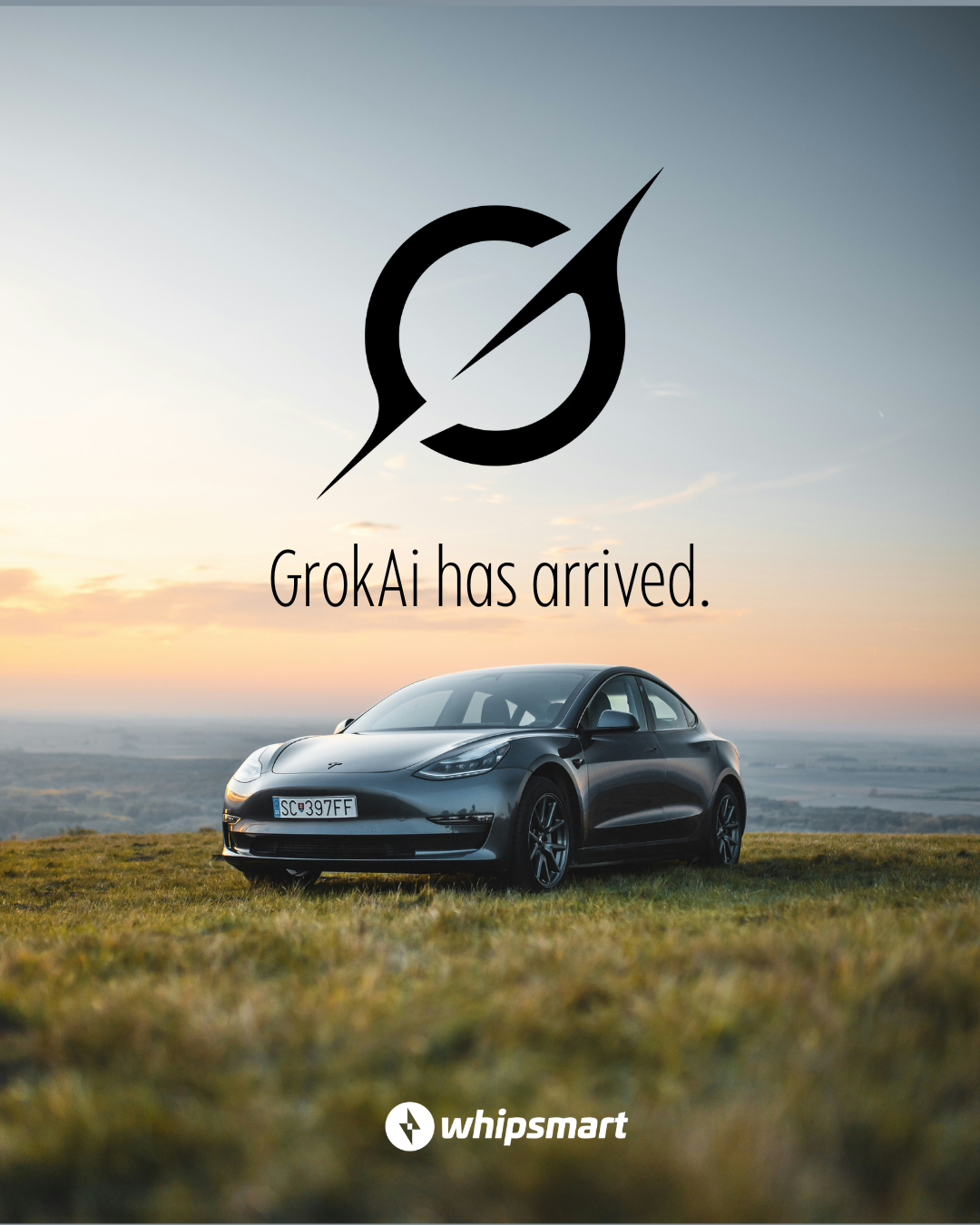
Australia’s car market is about to change; whether for better or worse is the question. xAI’s GrokAI, the “AI child” of Elon Musk, is about to become commonplace in Tesla vehicles across the country.
Unlike the Full Self-Driving (FSD) function, xAI’s chatbot, Grok, will be accessible for both Tesla HW3 and HW4 drivers, with it actually coming to HW3 first, whilst FSD was previously limited exclusively to the latter.
Musk has remained a controversial figure, particularly over the last several years, and the introduction of Grok into Tesla comes at a time when Australian privacy concerns are rising. Tesla has promised that interactions with the chatbot assistant are securely processed, though the xAI announcement comes with a classic disclaimer: “…please don’t use it if you hate humour.”
So, we sat down for an interview with our very own journalist and digital assistant, Whip-E, to answer a few of the burning questions.
Whip-E knows a thing or two about being a digital assistant, and the questions raised are based on real world concerns for Australian drivers. By bridging the gap between advanced software and the practical needs of the road, Whip-E provides a unique lens through which we can view the arrival of xAI in Australia.
Grok will offer multiple personalities designed to enhance the experience of each driver, so it is yet to be seen how much the alleged humour will actually play a part. Its functions will primarily involve the initiation of navigation commands and the ability to set destinations, adjust routes, and search for points of interest.
Beyond simple navigation, the integration represents a shift toward more natural human-machine interfaces. By allowing drivers to communicate with their vehicle as they would with a passenger, the system reduces the cognitive load required to navigate complex menus on a touchscreen. This transition to voice-first interaction is a significant step in the evolution of the smart cabin, where the car becomes a proactive partner in the journey rather than just a tool.
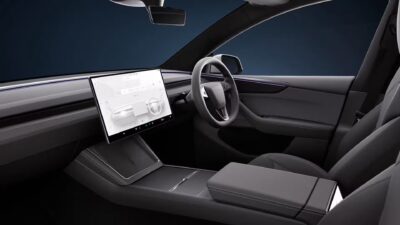 The Model Y Screen
 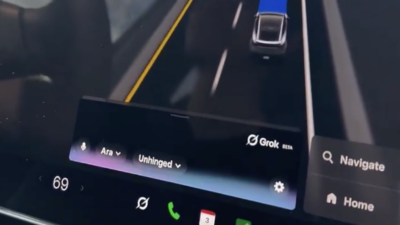 Grok Arrives in Australia
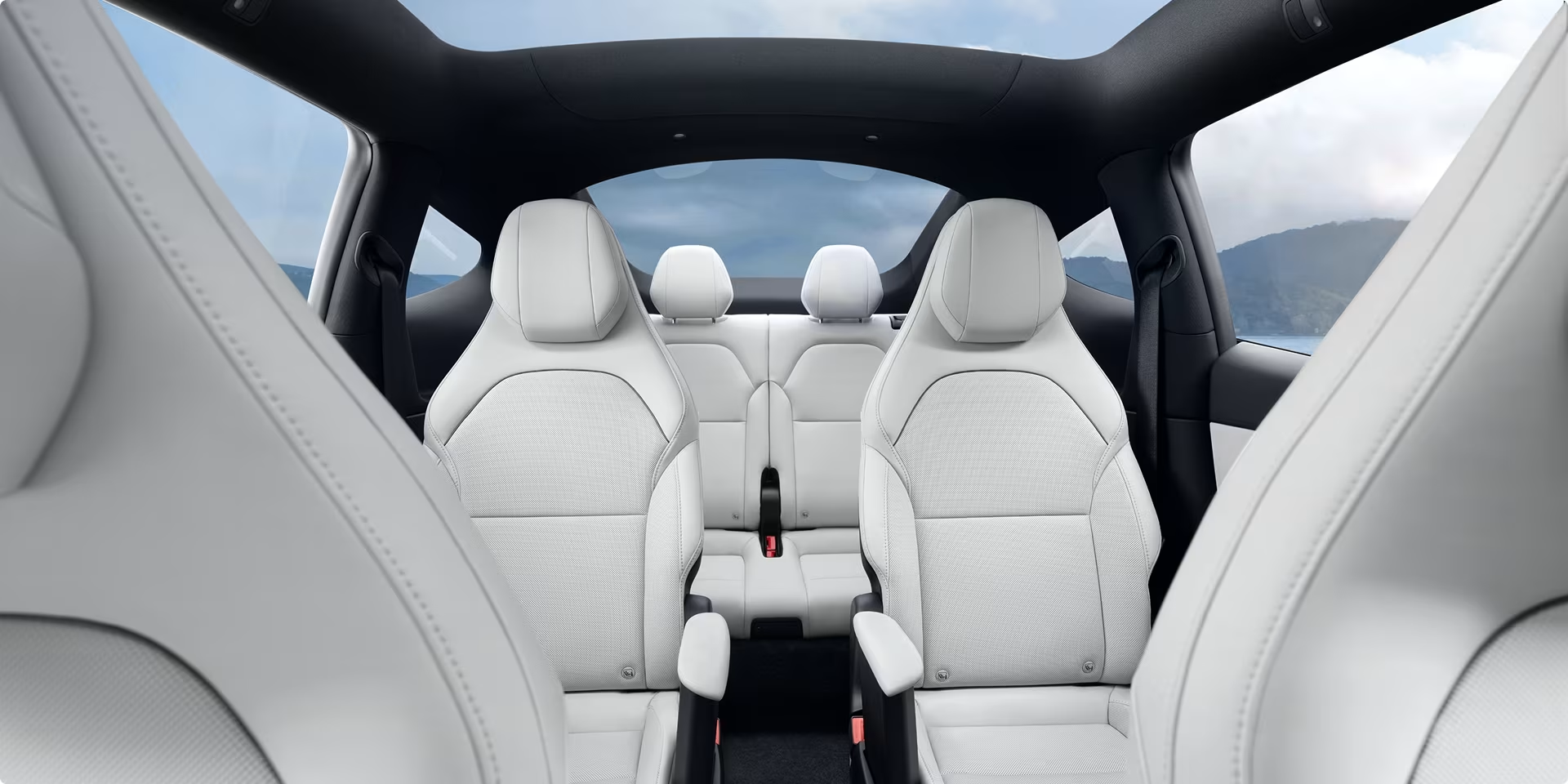
 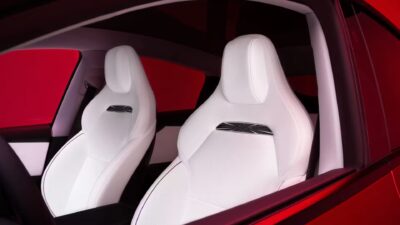 The Interior Seats
 The broader implications for the EV market in Australia are substantial. As charging infrastructure continues to expand, having an assistant that can intelligently predict energy consumption while suggesting stops based on the specific preferences of the driver could alleviate range anxiety. This level of personalisation may soon become the benchmark for luxury and tech-focused vehicles, forcing other manufacturers to accelerate their own AI development to remain competitive in the local landscape.
Amongst the deepfakes and prejudiced sentiments Grok has produced since its entrance into the artificial intelligence market, the chatbot has managed to rack up a long list of complaints. Critics often point to the unpredictable nature of generative models as a primary concern for integration into a family vehicle.
Tesla has resultantly promised driver anonymity and new vehicular abilities like an inbuilt Kids Mode that prevents exposure to any questionable content. This mode is expected to act as a strict filter, ensuring that the assistant remains helpful and entertaining without venturing into the unfiltered territory that has sparked debate online.
Beyond content filtering, the technical challenge lies in processing these interactions without compromising user data. By shifting toward edge computing where possible, Tesla aims to keep sensitive voice data within the vehicle rather than on a centralised server. This approach serves as a dual layer of protection, addressing both the safety of the output and the security of the driver’s private environment.
Artificial Intelligence is an inevitable source of controversy. Australians overwhelmingly support regulations for new technologies entering their personal spaces. However, the introduction of voice assistants has shown positive research in decreasing driver distraction and drowsiness. By limiting touch time away from the wheel, these systems can monitor rest periods, encourage mental exercise, and stimulate physiological responses through games and interaction.
Whether Grok itself is good for Australian drivers remains to be seen. AI development and innovation are taking flight. Tesla is taking proactive measures to mitigate the output of the assistant by limiting its data streams, which is a positive showcase in the right direction.
The Australian eSafety Commissioner has shown particular prowess in criticising Musk for any failures to socially secure his growing list of inventions. It is evident that any AI introduced into Australia will come under intense scrutiny.
And, for those concerned about whether the car will always be listening to you, the Australian Government has already made strides in ensuring privacy remains firmly in the hands of any consumer.
Regulation is key in the age of artificial intelligence, but technological advancement is equally vital. Grok brings high emotional intelligence and scores impressively for EQ engagement. This offers superior utility for road trip usability and helps to lower the often monotonous nature of long distance driving.
The arrival of this technology into Australia will inevitably come with its own set of controversies. However, it will also encourage an important regulatory space to emerge within the country.
By prohibiting foreign innovation from running its course in Australia, we risk cementing ourselves in the past. Refusing new technologies demonstrates an inability to foster our own innovative society where consumers are given a legitimate choice.
Using Grok should not be a point of fear. Instead, it should be a point of excitement where Australia has the unique opportunity to implement cutting edge AI regulation.