
“Illumination.” That is what Luce translates to in Italian. With Ferrari’s claim that this model is the car that will “illuminate the path ahead,” the stakes couldn’t be higher. This isn’t just another launch; it’s Ferrari’s first foray into the electric era. We’re asking whether the Ferrari Luce can live up to the behemoth expectations of the world’s most famous ultra-luxury brand. With an interior co-designed by Sir Jony Ive and Marc Newson (the legends behind the original iPhone), and a 0-100 km/h time of 2.5 seconds, Ferrari has clearly pulled out all the stops to remain relevant. Let’s deep-dive into the specs to see if the Luce shines as bright as Ferrari wants us to believe
The Exterior: A Heavyweight Grand Tourer
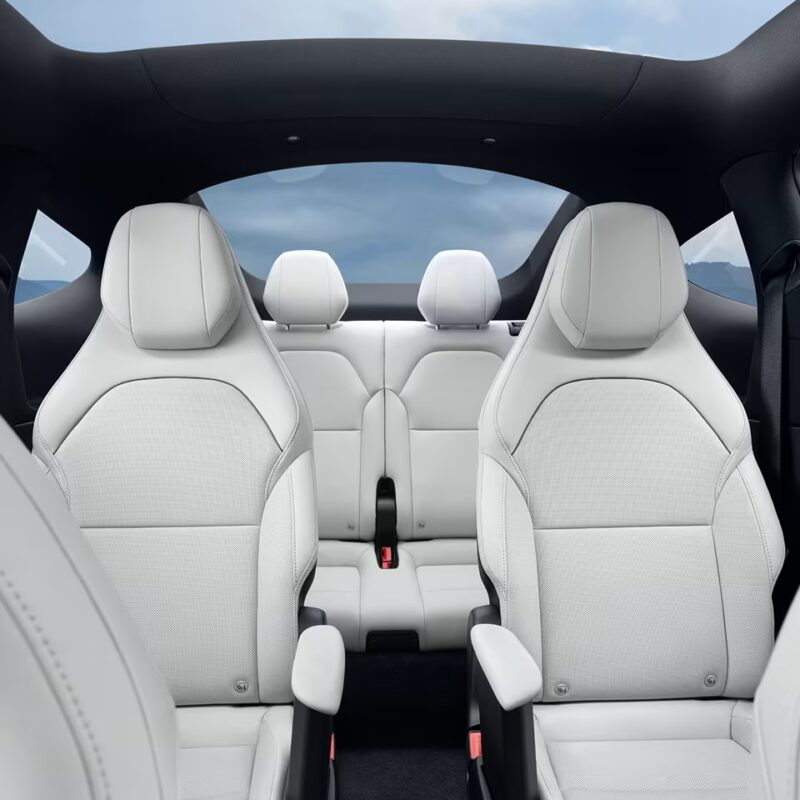
While the full production body won’t be revealed until May 2026 in Italy, we know the Luce is a radical departure for Maranello. It is a four-door, four-seat Grand Tourer (GT) with a silhouette that sits somewhere between a sleek sedan and a “shooting brake” wagon.
The Weight Factor: At approximately 2,300 kg (5,100 lbs), the Luce is the heaviest Ferrari ever made—outweighing even the Purosangue SUV.
Aerodynamic Innovation: Expect a “glass and aluminum” theme, with a wheelbase of 2,959 mm. It features active aerodynamics and a bespoke 880V platform designed to hide the bulk of the 122 kWh battery integrated into the floor.
Presence: Early glimpses suggest a minimalist aesthetic that trades aggressive vents for clean, “illuminated” surfaces, including a transparent Prancing Horse emblem that doubles as a notification light.
The Interior: The “iPhone” of Cabins
This is where the Luce truly separates itself. Jony Ive’s firm, LoveFrom, has spent five years crafting a Human Interface that rejects the industry’s obsession with massive tablets.
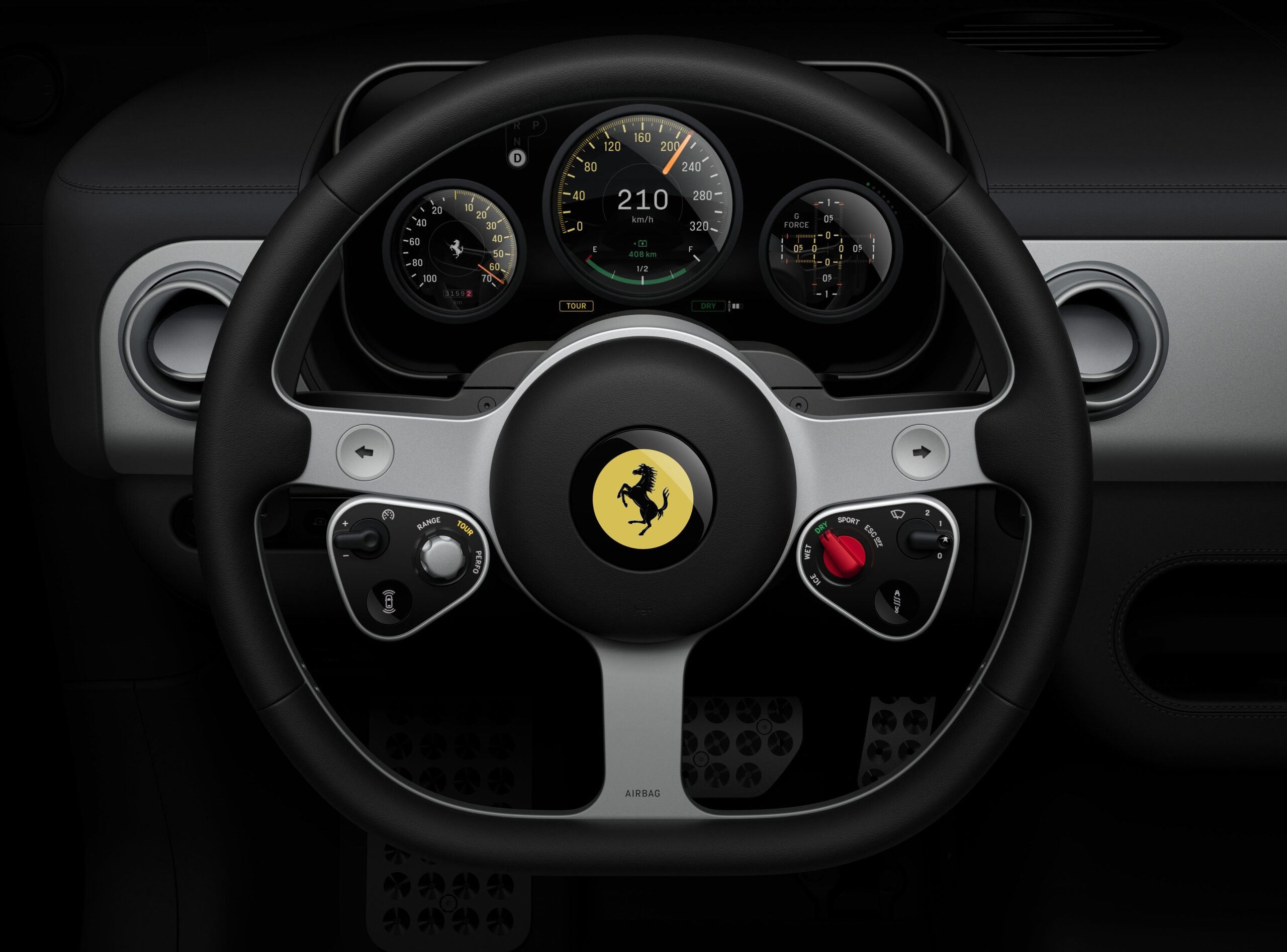
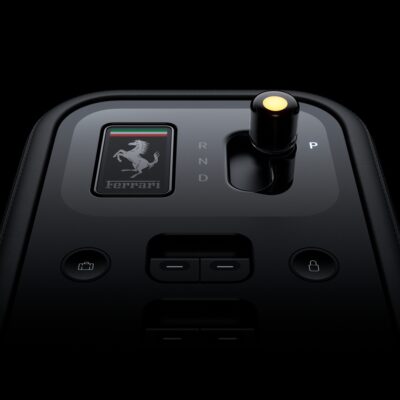
Tactile Revival: Almost every control is a physical, precision-machined toggle or switch. Ferrari says the buttons “click like a rifle bolt,” offering an ASMR-like feedback that touchscreens simply can’t match.
The Glass Key: The startup ritual involves docking a rectangular Corning Gorilla Glass key into the console, which triggers a yellow E-Ink Ferrari logo to illuminate.
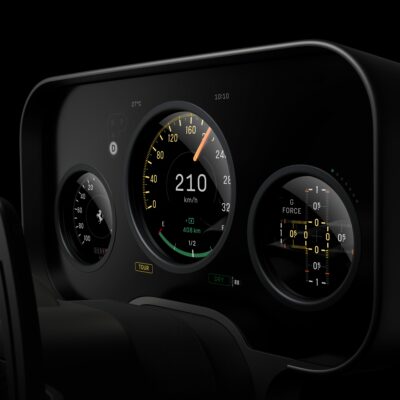
Layered Displays: Developed with Samsung, the instrument binnacle uses overlapping OLED panels to create a 3D parallax effect, featuring physical needles sweeping over digital graphics; a gorgeous nod to classic Veglia gauges.
Aviation Roots: The overhead console features helicopter-style toggles, including a massive aluminum handle to engage Launch Mode.
Technical Specs: The Power of Electrons
Ferrari isn’t sacrificing performance for the sake of the environment. The Luce uses a quad-motor setup with technology derived directly from their Formula 1 program.
FeatureSpecificationPowertrainQuad-motor AWD (Halbach array rotors)Total Power1,113 hp (>1,000 cv in boost mode)0–100 km/h2.5 SecondsTop Speed310 km/h (192 mph)Range530 km (WLTP)Charging350 kW (DC Fast Charging)Types of Luce: Variants & Pricing
Ferrari is positioning the Luce as a “halo” product, meaning it will likely be sold to existing collectors first.
Base “Luce”: The standard high-performance GT.
Assetto (Track-Focused): A lightened version using race-derived materials and aggressive cooling.
Spyder: A convertible variant is expected to follow, though it may trade some range for the open-air experience.
The Price Tag: Expect to pay for this level of “illumination.” Starting prices are estimated at €500,000 (approx. $815,000 AUD), easily climbing to $1.2 million with bespoke tailoring.
While we likely won’t see the Luce on Australian roads for some time, and its price tag will certainly sit in the upper echelons of the Luxury Car Tax bracket, far beyond the reach of FBT exemptions, its existence serves a vital purpose. It marks the definitive end of the “plastic toy” era for electric vehicles. By melding Jony Ive’s minimalist genius with Maranello’s performance heritage, Ferrari is proving that the transition to electric isn’t a compromise of character, but an evolution of bespoke luxury.
Ultimately, the Luce is a lighthouse for the industry, signaling that even the most storied brands can find their soul in a silent powertrain. It shifts the conversation from kilowatt-hours and screen sizes back to where it belongs: the visceral, tactile joy of the machine. For the Australian market, it validates that the EV revolution has moved beyond mere utility; it is now the new standard for automotive excellence, illuminating a path where heritage and innovation drive side-by-side.